

















 Loading...

In the grand ecosystem of casual online games, there exists a peculiar and delightful subgenre that transforms the mundane into the mesmerizing. Catch An Ant, a quietly addictive title in the GamePix library, is a perfect specimen of this craft. It does not rely on flashy explosions, intricate storylines, or high-octane speed. Instead, it zooms in on one of the most ordinary, often overlooked dramas of the natural world: an ant crawling across a surface, unaware it is being hunted. Your weapon is not a sword or a laser, but a virtual finger, and your prey is a tiny, six-legged pixel of relentless motion. The premise is so simple it could be a childhood pastime, yet the game reveals itself to be a profound exercise in focus, fine motor control, and the rapidly vanishing art of patience.
This article is your comprehensive companion to the surprising depths of Catch An Ant. We will journey beyond the simple act of squishing a bug and uncover the rich cognitive and emotional layers woven into its design. From the psychology of hunting a tiny target to the advanced hand-eye coordination it demands, we will explore how this unassuming game becomes a masterclass in precision, a tool for mindfulness, and a test of your ability to predict chaotic movement. Whether you're seeking a new high score, a way to sharpen your reflexes, or simply a moment of quiet concentration in a noisy world, prepare to see the humble ant in a whole new light.
The Surprising Allure of a Tiny Target
Why does a game about catching an ant hold such universal and immediate appeal? The answer is rooted in the tactile memories of childhood. Almost everyone, at some point, has hovered a finger over a busy ant trail, marveling at the insect’s single-minded determination, and attempted to gently intercept its path. Catch An Ant digitizes this primal, curious impulse and strips it of consequence. There is no messy cleanup, no guilty conscience about harming a living creature. There is only the pure, distilled challenge of the chase.
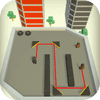
The game’s visual design is a study in functional minimalism. The background is often a macro-photography-style surface: a wooden table, a picnic blanket, or a green leaf, rendered in soft, hyper-realistic or warmly stylized textures. Against this backdrop, the ant is a sharp, dark, scurrying silhouette, instantly legible to the eye. There are no elaborate HUDs or distracting menus. The entire world of the game is the screen you can see, and the entire conflict is between your cursor and the ant. This purity of concept is its greatest strength. In a world of constant digital noise and sensory overload, Catch An Ant offers a single, clear objective. The sound design reinforces this, often featuring the faint, amplified pitter-patter of tiny legs—a sound that is both comical and strangely hypnotic, drawing you deeper into the micro-world on your screen.
Decoding the Ant’s Algorithm: The Logic of the Scurry
To the untrained eye, the ant’s movement appears completely random. This is a deceptive illusion. The ant is not a chaotic sprite; it is a programmed entity operating on a set of behavioral algorithms that you can learn, predict, and ultimately outsmart. Mastering Catch An Ant is not about having a faster hand; it’s about becoming a student of the scurrying mind.
The foundational pattern is the Phasic Movement Cycle. The ant typically oscillates between two distinct modes: the deliberate speed-walk and the panicked scramble. In its default state, the ant moves with a purpose, often tracing seemingly curved but geometrically simple paths. It might patrol an invisible perimeter or arc back and forth across a food source. This is your setup phase. The ant is catchable here, but it’s moving predictably, and a miss is often a result of impatience. However, the moment your cursor enters its "awareness zone," or after a near-miss click, the ant switches to its second mode: the scramble. Its speed multiplies, its turning radius becomes impossibly tight, and its direction becomes a frantic, zigzagging evasion tactic.
The strategic implication is critical. A frantic, reactive chase during the scramble mode is almost always doomed to fail. Your cursor, no matter how steady, is being controlled by a human with a reaction time of roughly 250 milliseconds. The ant’s digital evasion has zero lag. You cannot out-twitch a panicked algorithm. Therefore, the winning strategy is not to chase the scramble, but to wait it out. The scramble is an energy state, and like a panicked animal, the digital ant will eventually tire and return to its predictable speed-walk. Your job is to hover, wait, and strike when the chaotic phase subsides. Patience is your primary weapon.
The Predator’s Arsenal: Advanced Clicking Techniques
Clicking on a moving ant is not a single action but a family of techniques. Knowing which one to deploy in a given situation is what separates the novice from the skilled hunter.
The Ambush Click: This is the foundational technique. The ambush click relies on prediction, not reaction. Do not chase the ant. Instead, study its current, deliberate patrol path. If it is walking in a roughly straight line, you know where it will be in the next second. Position your cursor not on the ant, but a few ant-lengths ahead of it, right in its path. Then, click not when the ant arrives, but a microsecond before. You are timing the click to coincide with the ant walking under your descending fingertip. Think of it as a receiver catching a pass; you don't grab the ball, you let the ball come to your hands. The ambush click transforms the game from a chaotic chase into a calm, rhythmic exercise of timing a single, stationary click on a known trajectory.
The Splat Zone: The ambush click is flawless for the speed-walk phase. But what about the scramble? This is where the "splat zone" technique comes in. A single, precise click is a low-probability bet against a zigzagging ant. You must increase your probability by increasing your click’s surface area. Instead of a polite, single index-finger tap, use multiple fingers to drum rapidly in a small, contained circle in the ant’s general vicinity. It’s a controlled burst, not a wild flailing. You are not trying to track the ant perfectly; you are creating a temporary "splat zone" of overlapping clicks that the ant, in its panicked darting, has a high chance of running into. This technique is especially useful for touchscreen players, where a quick two-finger roll can be devastatingly effective.
The Herding Click: This is a more advanced, psychological technique. The ant’s scramble response often reacts to the cursor’s proximity. You can use this. Instead of moving your cursor directly onto the ant, position it slightly to the side, creating a "wall" of unwanted space. The ant will often turn away from the cursor. You can gently, subtly "herd" the panicking ant by moving your cursor in a parallel but offset path, guiding it toward a corner or edge of the screen. A cornered ant has fewer escape vectors. Its scramble pattern becomes predictable because its options have been geometrically limited. Then, you execute a standard ambush click. This is the strategic mind-game of the ant world.
The Fine Motor Workout: Calibrating Your Hand-Eye Connection
Catch An Ant is a surprisingly effective diagnostic tool and trainer for your fine motor skills and hand-eye coordination. The game exposes a fundamental disconnect in many players: the gap between where your eyes think your finger or cursor is, and where it actually is. When you miss an ant by a hair’s breadth, that is your visual and proprioceptive systems being slightly out of sync.
The game demands two distinct physical skills, depending on your platform. On a desktop or laptop, it’s a test of precise mouse control and mousepad real estate management. The most common failure is a "runaway mouse," where a sudden scramble causes the player to jerk their hand, sending the cursor flying to the edge of the screen. The fix is a combination of lowering your mouse sensitivity for the game and practicing movement from your wrist and fingers, not your shoulder. You want small, precise, controlled glides.
On a mobile device or tablet, the dynamic is completely different. Your finger is now directly occluding the target. This is a profound challenge. The moment you move to tap the ant, your own finger blocks your view of it. You are tapping based on the ant’s position a fraction of a second ago, relying on a mental prediction model. Mobile mastery involves learning to offset your tap. You learn to tap slightly to the side of the ant or to develop a "flick" tap where your finger is a blur, in and out so fast that the occlusion time is minimized. This is training a highly specific, delicate motor skill, one that has direct benefits for the overall precision and speed of your touchscreen interactions in daily life.
The Zen of Squishing: Mindfulness in a Pixelated Hunt
On the surface, a game about squishing bugs might seem like the antithesis of relaxation. Yet, paradoxically, Catch An Ant can be a surprisingly effective tool for mindfulness and stress relief. The reason lies in the game’s insistent demand for single-pointed, unwavering focus. You cannot play this game while half-watching a video or ruminating on an argument. The ant demands your complete, present attention. The moment your mind wanders, the ant scurries away.
This forced single-tasking is a form of active meditation. The object of your meditation is the tiny, moving black dot. Your breath steadies as you wait for the speed-walk. The mental chatter—the anxieties, the to-do lists—fades into the background, replaced by the immediate, simple loop of observe, predict, position, and click. The world shrinks to a wooden tabletop and a six-legged enigma. The satisfying "pop" or visual confirmation of a successful catch provides a small, clean hit of accomplishment, a moment of resolution. A miss is not a failure but a gentle nudge to return your focus to the present moment.
This makes the game a perfect "transitional activity." It’s a mental palate cleanser. Playing for three minutes between tasks at work can help reset a fatigued brain. It pulls you out of the fog of a complex project and roots you in a simple, achievable sensorimotor task. The cognitive shift from abstract reasoning to focused perception is deeply refreshing, making Catch An Ant not just a game, but a micro-vacation for your overworked prefrontal cortex.
A Parent’s and Educator’s Guide: The Hidden Developmental Benefits
For parents who might dismiss Catch An Ant as a trivial time-waster, a closer look reveals a suite of developmental benefits for young players. The game is a safe, consequence-free environment to train several crucial early childhood skills.
The most obvious is the development of fine motor control and hand-eye coordination, as discussed earlier. For a child, translating a visual target’s movement into a precise finger motion is a fundamental neurological building block, directly supporting handwriting, drawing, and physical sports skills. The game also provides a powerful, non-verbal lesson in cause and effect and pattern recognition. "When I click on the ant, it disappears. When I miss, it runs faster." This direct feedback loop teaches the child to modulate their actions based on the consequences they observe, the very foundation of logical reasoning.
Furthermore, the game is a masterclass in delayed gratification and impulse control. The instinct of a young child is to furiously chase the ant. The game teaches them, through repeated failure, that this approach does not work. The victory goes to the calm, patient, waiting approach. The child learns that sometimes, the fastest way to achieve a goal is to slow down. This internalized lesson in patience, learned through the playful medium of bug-catching, is a rare and valuable gift in our instant-gratification culture. It’s a digital sandbox for learning emotional self-regulation.
The Advanced Hunter’s Field Manual: Troubleshooting Your Misses
Every skilled ant-catcher eventually hits a plateau. The ants seem to get faster, your reaction time feels sluggish, and you fall into a rut of frantic clicking. When this happens, it’s time for a systematic diagnosis.
The Chronic Near-Miss (The “Over-Lead”): You are consistently clicking just in front of the ant. Your prediction is sound, but your timing is a fraction of a second too eager. The fix: Consciously slow down your internal metronome. For the next ten attempts, deliberately try to click on the back half of the ant. This mental command will recalibrate your timing and bring your click back to center-mass.
The Chronic Behind-Miss (The “Laggy Finger”): You are consistently clicking behind the ant, on its trail. Your prediction is failing to account for the ant’s speed. The fix: Increase your lead distance. Intentionally aim twice as far ahead of the ant as you think you should. You’ll be surprised to find your "outrageous" prediction was actually perfectly on target. This retrains your brain to process the ant’s true velocity.
The Panic-Scatter Fail: You encounter the scramble phase and your hand devolves into a spasm of random, desperate clicks. The fix: Go cold turkey on the chase. For five full scrambles, do not click at all. Just hover your cursor and watch. Study the pattern of the chaos without the pressure to act. Detach the observation from the action. You will be amazed at how much of the scramble is actually a repeating set of tight zigzag arcs. Once you have seen the pattern, the fear dissipates, and your next splat zone will be surgically precise instead of panicked.
Environmental Awareness Failure: The ant has run behind a visual obstacle—a blade of grass, a crumb, a leaf’s edge. You lose sight of it and click randomly. The fix: Don’t click. The ant’s path is continuous. Mentally project its trajectory through the obstacle based on its last known vector. Place your cursor on the exit point of the obstacle and wait. The ant is not gone; it’s just temporarily obscured.
The Philosophy of the Hunt: A Relationship with Nature, Pixelated
There is something profoundly, mythologically resonant about a game that pits human intelligence against a tiny, non-human intelligence. It echoes our ancestral past, where tracking small game was a vital skill of observation and patience. Catch An Ant digitizes this ancient dynamic. The ant, in its relentless, programmed quest for its invisible goal, becomes a worthy, almost admirable adversary. It never gives up. It never stops moving. Its existence is pure, unthinking purpose.
Your role is the patient, observing consciousness. The game frames a quiet, respectful contest. The ant is not an enemy to be destroyed in a power fantasy; it’s a puzzle to be solved. This shifts the emotional tone away from aggression and toward a focused, almost scientific curiosity. You are a naturalist with a mouse button, studying the behavior of your subject to understand it well enough to predict its next move perfectly. The satisfaction of a successful catch is not a victory of force, but of intelligence, of your brain’s predictive model aligning perfectly with the digital ant’s path for one decisive, elegant moment.
From Fumbling Fingers to Zen Master: The Journey of Skill
The path of the Catch An Ant player is a beautiful arc of growth that mirrors the acquisition of any deep skill.
It begins with the Chaotic Swatting Phase, where the ant seems impossibly fast, a blur of disrespect. Every miss feels personal, and the game feels unfair.
Then comes the Discovery of the Speed-Walk, the first major breakthrough, where you notice the ant has a calm mode. The game shifts from a twitch test to a waiting game. Your success rate climbs, and you feel the first thrill of outsmarting the program.
The Predictive Phase follows, as the ambush click becomes your primary tool. You are no longer reacting to the ant; you are meeting it at a predetermined point in the future. The game becomes a flow state of calm, rhythmic timing. Misses are no longer frustrating but are analyzed as minor calibration errors in your lead distance.
Finally, you reach the Zen Phase. There is no separation between you, the cursor, and the ant. The hunt is a silent, meditative dance. The scramble holds no fear; the speed-walk is an invitation. A click is not a violent act but the final, logical note in a quiet symphony of observation and motion. This journey, from clumsy frustration to effortless grace, is the true reward hidden inside this simple game.
The Final Catch: Patience is the Ultimate Weapon
At its core, Catch An Ant is a Trojan horse. It presents itself as a trivial piece of amusement, a way to kill a few seconds. But hidden inside is a profound lesson in one of the most difficult and rewarding human virtues: patience. The game, through its infuriatingly clever design, teaches you that frantic effort is often counterproductive. It shows you that observation is a form of action. It proves that the fastest way to catch your target is to slow down, breathe, and wait for the perfect, inevitable moment.
The tiny ant on your screen is a mirror. It reflects back your own impulsivity, your capacity for calm, and your ability to learn the rhythms of a world that is not your own. So, the next time you find yourself staring at that scurrying pixel, don’t just chase. Watch. Understand. Predict. Let the ant’s frantic energy become your calm focus. The hunt is not in the click; it’s in the quiet, patient space between the clicks. That is where the game is truly won.
Embed this game