





















 Loading...

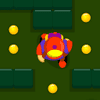
In the vast constellation of casual online games, a new star periodically emerges that is deceptively simple in concept yet profoundly challenging in execution. Catball, found in the vibrant arcade catalog of GamePix, is precisely such a game. At first encounter, it presents itself with an almost disarming innocence: a wide-eyed, spherical cat sits patiently in a cannon, waiting to be launched into a sky filled with coins, platforms, and distant goals. It looks like a gentle, whimsical pastime. But within minutes of your first launch, you discover the truth. Beneath its charming exterior, Catball is a masterclass in trajectory, timing, momentum, and the delicate physics of a perfect bounce.
This is not a game of random chance or mindless clicking. It is a game of feel, of intuition calibrated by the unforgiving laws of virtual physics. It invites you into a hypnotic loop of aim, launch, and observe, constantly teasing you with the promise of a perfect run. This article is your definitive guide to transcending mere luck in Catball. We will dissect the game’s physics engine, explore the psychology of its addictive gameplay loop, and provide you with a tactical framework to turn your haphazard launches into a symphony of controlled, coin-collecting brilliance. Whether you’re seeking to dominate the leaderboard or simply understand why you can’t stop playing, welcome to your masterclass in feline ballistics.
The Irresistible Allure of the Flying Feline
Why does a game about shooting a cat from a cannon resonate so deeply? The answer lies in its masterful combination of three universally appealing elements: a cute protagonist, a dead-simple control scheme, and an endless ceiling for skill mastery. The visual and auditory design of Catball is engineered for delight. The cat itself, a rotund ball of fur with oversized eyes, is the perfect, helpless hero. It does not walk or fight; it simply tumbles through the air, spinning with a comedic grace, collecting coins with a satisfying chime. This passivity makes the cat sympathetic. You are not controlling the cat; you are controlling its destiny, responsible for every glorious flight and every ignoble plunge into the abyss.
The control scheme is the epitome of "easy to learn, impossible to master." You do not control the cat in flight. Your entire agency is condensed into a single, charged moment before the launch. You pull back, you aim, and you release. That’s it. This brilliant limitation shifts the entire strategic weight of the game onto your powers of prediction and preparation. Every success is a vindication of your foresight; every failure is a lesson in physics. The cheerful art style, the bouncy sound effects, and the cascade of coins create a constant sensory reward loop that masks the hardcore trajectory-puzzle lurking at its heart.
Decoding the Physics Engine: The Heart of Catball
To play Catball at a high level, you must stop seeing it as an arcade game and start seeing it as a physics simulator draped in cat fur. The game operates on a consistent, predictable, but unforgiving set of physical rules. Internalizing these rules is the first step toward mastery.
The Power Curve and Launch Angle: The cannon is your only interface with the game world. When you pull back on the cannon, you are not just setting a direction; you are charging a vector of force. The further you pull back, the greater the initial velocity imparted to the cat. This velocity is always directed along the line of the cannon’s barrel. Understanding the relationship between power and distance is crucial. A short, low-power lob will send the cat on a gentle arc, ideal for close platforms. A full-power launch sends the cat screaming across the screen, suitable for distant targets but incredibly difficult to control. The angle, combined with the power, determines the entire shape of the flight path.
Gravity’s Unforgiving Pull: Once airborne, your cat is a ballistic projectile subject to a constant downward acceleration simulating gravity. This gravity sculpts the classic parabolic arc. The moment of launch, your cat is fighting gravity. At the apex of its arc, the vertical velocity is zero, and for a split second, the cat hangs in the air. Then, gravity wins, pulling it back down with increasing speed. Mastering Catball is mastering the mental visualization of this parabola. You must be able to look at a distant platform and instantly estimate the angle and power required to intersect its location at the right point in the arc—ideally, right at the apex for a soft, vertical drop, or just before it, to carry forward momentum.
The Complex Dance of the Bounce: This is where Catball transcends a simple "aim and shoot" game and becomes a strategic puzzle. The cat is not just a projectile; it’s a bouncing ball. When it hits a surface—a starting platform, a floating island, a vertical wall—it rebounds. The game mechanics of this bounce are everything. The angle of incidence roughly equals the angle of reflection. A shallow, fast-moving cat hitting a flat platform will skim and bounce forward at a similarly shallow angle. A cat falling nearly straight down will bounce almost straight back up. However, there is often a subtle damping effect, a loss of energy, meaning the bounce is not perfectly elastic. The cat will not bounce back to the same height from which it fell without an external boost. This introduces the critical strategic concept of using platforms not just as targets, but as course-correction tools to bleed off excess speed or subtly redirect the cat toward a tight cluster of coins.
The Strategic Trinity: Aim, Bounce, and Collect
Moving from physics to gameplay, every successful run in Catball is built on a strategic trinity. You are constantly balancing three competing objectives: where you want to go, how the environment will redirect you, and the optimal path to gather resources.
Aim: The Predictive Art. The first and most obvious skill is raw aiming. This is the ability to use the cannon to place your cat on a desired first platform. A beginner aims at the platform. An expert aims through the platform, visualizing the trajectory of the bounce to the next destination. The launch is not the end of a move; it is the setup for a sequence. You must learn to see the first platform as a launchpad in itself.
Bounce: Momentum Management. The bounce is your primary tool for managing momentum. Too much speed is the silent killer in Catball. A high-powered launch might reach a distant platform, but the resulting bounce will be uncontrollable, sending the cat careening off into the void. This is where the strategy of the "soft drop" becomes vital. For a platform directly below, a launch with just enough power to pop the cat up a tiny distance will result in a gentle landing and a minimal, controlled bounce. Conversely, to cross a wide gap followed by a high wall, you need a high-powered, angled shot that uses a low platform as a skip—a trampoline to convert forward velocity into upward velocity.
Collect: The Path of Optimization. Coins are never placed arbitrarily. Their arrangement is the game designer’s way of communicating the intended, optimal flight path. A curved line of coins in the air is a silent instruction manual. It tells you, "Follow this arc." The true art is not just collecting coins, but weaving them into a single, fluid motion. A beginner stops at a platform, then launches again. A master collects a string of airborne coins on the descent to a platform, lands, bounces, and collects a second string on the ascent in one unbroken, beautiful sequence. This is where the game transforms from a puzzle into a performance.
The Coin Conundrum: To Greed or Not to Greed
The glittering coins scattered across the sky are more than just a score counter; they are a psychological test. They whisper the siren’s call of greed, urging you to deviate from the safe, planned trajectory for a chance at a few extra shiny baubles. This is the coin conundrum, and how you manage it defines your Catball maturity.
The ultimate goal is progression, often reaching a specific endpoint on the level. Coins are secondary, a reward for elegance and risk-taking. A common failure pattern is the "greed drift," where a player makes a perfectly aimed launch for a platform, but mid-flight, they visually latch onto a nearby cluster of coins and, through sheer wishful thinking, will the cat toward them. This almost always results in missing the essential platform and falling. The rule of thumb is ruthless but necessary: prioritize the platform. Secure your landing zone first. A grounded, ready-to-relaunch cat is worth infinitely more than a cat who clipped three coins and is now falling into the bottomless pit.
The expert approach is to integrate coins into the planning phase, not react to them. Before you launch, your eyes should not just look at the landing platform. They should trace the entire arc. Are there any coins that naturally lie along this parabola? If yes, they are "free" coins—collected without any deviation. Collecting them is pure profit. Are there coins just slightly off the arc, requiring a tiny nudge of the launch angle or a different landing spot on the platform to affect the bounce trajectory? This is calculated risk, a conscious decision where the potential reward is weighed against the lowered margin for error. The rule is: never chase a coin that requires you to alter the core, safe trajectory unless you have mentally mapped a viable recovery path. A disciplined collector will always outscore a reckless one in the long run.
The Hidden Depths: Understanding Momentum, Walls, and Ceilings
To truly ascend to Catball virtuosity, you must move beyond open-air arcs and understand how the cat interacts with the boundaries of the level. Walls and ceilings are not just obstacles; they are advanced tools.
Wall Play for Vertical Control: A vertical wall is a momentum reset. A cat launched with high horizontal speed will hit a wall and bounce back horizontally, but its vertical velocity is often largely preserved or converted. This is an essential technique for levels with vertical shafts. You don’t aim to fly directly up the shaft. You aim to bounce the cat off one wall, angling it so it ricochets off the opposite wall slightly higher up, in a controlled zigzag pattern. This converts a single powerful launch into a multi-stage climb, a technique that feels incredibly satisfying to execute.
The Ceiling as a Brake: If the cat has too much upward velocity and is about to sail clear over your target platform into the abyss beyond, a low ceiling is a godsend. You can deliberately over-power a shot to use the ceiling as a brake. The cat hits the ceiling, loses its upward momentum, and drops almost vertically. This is an incredibly precise, high-risk, high-reward move for collecting a coin cluster hovering just above a platform. You aim not for the platform, but for the ceiling spot directly above it, letting the impact do the work of converting a wild arc into a controlled descent.
The Cat’s Friction and Hitbox: Over time, you will develop a feel for the cat’s physical presence. The cat is not a single point; it’s a sphere with a physical hitbox. It’s possible to graze the very edge of a platform, catching just enough of it to trigger a bounce, sending you off at a slightly altered angle. This is a recovery technique, not a primary strategy, but knowing the cat’s girth can save a run that seems doomed by a millimeter. You will also develop an intuitive sense of the "slide." On some platforms, especially at shallow impact angles, the cat might skid slightly before bouncing, subtly changing the reflection point. This feel-based nuance is the final, unteachable frontier of Catball mastery.
The Psychology of the Loop: Why "One More Try" is Irresistible
Catball is a masterful example of a "just one more try" game, and its addictive power comes from a perfectly crafted psychological loop. The game environment is low-anxiety. The colors are bright, the music is upbeat, and the failure state is not a violent explosion but a gentle, almost comedic tumble off the screen. This keeps the emotional stakes low, making it incredibly easy to click "retry."
The core loop has a short cycle time. An attempt, from launch to failure or success, might take only ten to thirty seconds. This rapid turnaround prevents frustration from building. You don't have to sit through a long death animation or reload a complex world. You are instantly back in the cannon, slightly wiser. The game also brilliantly leverages the learning curve. Progression feels tangible not just in levels passed, but in skill acquired. A jump that seemed impossible twenty minutes ago becomes routine. This sense of self-improvement is one of the most powerful intrinsic motivators. You aren't just earning a high score; you are becoming a more capable player, developing a deeply satisfying intuition for the game’s physics.
The final psychological hook is the "near miss." More than outright failure, it’s the attempt where you almost made it that is the most compelling. The run where you collected a massive string of coins, executed two perfect bounces, and then grazed the final platform’s edge by a single pixel. Your brain registers not the failure, but the almost-success. It calculates that only a tiny adjustment is needed, and the goal is tantalizingly within reach. This perceived proximity to success is a powerful driver, pulling you back in for attempt after attempt.
A Parent’s and Educator’s Perspective: A Physics Playground
Beyond pure entertainment, Catball is a covert educational gem, a physics sandbox wrapped in an adorable package. For parents and educators, this game offers a rich, non-didactic way to introduce core concepts of physics.
The game is a live, interactive demonstration of projectile motion. Children aren’t reading about gravity, parabolas, and momentum; they are feeling them. They learn intuitively that a higher angle gives a shorter, higher arc, while a lower angle gives a longer, flatter one. They see the conservation of energy (imperfect though it may be) in every bounce. The very act of adjusting the cannon’s angle and power to hit a distant target is a hands-on lesson in vector decomposition, teaching them to balance vertical and horizontal forces to achieve a desired result.
Furthermore, the game is a stealth training ground for problem-solving and resilience. It presents a clear problem (reach the goal) with limited tools (angle and power) in a system with consistent rules (the physics engine). There is no punishment for failure, only the instant opportunity to form a new hypothesis and test it. "My last shot was too strong and overshot. I hypothesize that if I use ten percent less power, I will land on the platform." This is the scientific method in its purest, most joyful form. The iterative process of trial, error, and refinement fosters a growth mindset, teaching that mastery is a result of persistence and calibrated adjustment, not innate talent.
The Path to Mastery: From Button-Masher to Ballistician
What separates a casual Catball player from a true master? It’s a journey through distinct stages of understanding that mirrors the acquisition of any deep skill.
The first stage is the Discovery Phase. You are captivated by the charm, launching the cat wildly, surprised and delighted by any coin you happen to collect. Progress is accidental.
The second stage is the Calibration Phase. The novelty fades, and you begin to notice the physics. You start making deliberate, smaller adjustments. You discover the bounce. You hit your first frustrating wall—a level that seems to require an impossible jump—and you are forced to think, not just react.
The third stage is the Internalization Phase. You no longer guess the arc; you see it. A dotted line seems to appear in your mind’s eye the moment you see a platform. The cat’s movement feels like an extension of your own intention. You start using walls deliberately. Your coin collection moves are planned two bounces in advance.
The final stage is the Flow State. The game becomes a quiet, meditative rhythm. Aim, launch, bounce, collect, land, repeat. The analytical part of your brain goes quiet, replaced by a deep, intuitive feel. You are no longer playing the game; you are conducting a symphony of motion, reacting in real-time to subtle shifts in the cat’s trajectory and making micro-adjustments not with your conscious mind, but with your fingers. Achieving this state in a game as pure as Catball is a profoundly satisfying and relaxing experience, a true digital meditation.
Troubleshooting Your Trajectory: A Field Guide to Common Failures
Every ballistics expert crashes occasionally. When you find yourself stuck, endlessly repeating the same flawed launch, stop. Diagnose the failure systematically.
- The Chronic Overshoot: Your cat constantly sails over the target. You are consistently overestimating the required power. The fix: aim deliberately low. For your next five attempts, consciously try to have the cat hit the front lip of the platform, not its center. You’ll be surprised how often a “short” shot is actually perfect.
- The Chronic Undershoot: Your cat bumps its head on the underside of the platform and plummets. You are under-powering or launching from too high an angle. The fix: Increase power in ten percent increments and mentally note the landing point. Or, lower your launch angle slightly to convert some vertical power into the horizontal distance you need to clear the ledge.
- The Uncontrollable Bounce: You land perfectly, but the cat ricochets off the platform at a wild angle. The fix: You have arrived with too much horizontal velocity. Your goal isn’t just to hit the platform; it’s to arrive at the platform’s location at the apex of your arc, where your vertical and horizontal speeds are at their minimum. This results in a dead-cat bounce, a small, vertical hop that’s easy to control. Work backward: to have the apex be over the platform, you must aim that apex, not the platform itself.
- The Wall-Tunnel Wobble: You’re stuck in a vertical corridor, bouncing left and right uncontrollably until you fall. The fix: Your launch angle is too shallow. Instead of trying to bounce like a light beam, try a launch angle that is almost, but not quite, vertical. Give the cat just a tiny bit of horizontal drift so it kisses one wall near the apex of a high arc, then use a small bounce to nudge it onto the next platform. Think of it as a high, slow climb, not a fast ricochet.
The Final Flight: A Synthesis of Art and Science
Catball endures because it represents a perfect union of art and science. The science is the uncompromising physics engine, the consistent rules of gravity and momentum that form a fair, logical challenge. The art is the player’s expression within those rules—the elegant arc, the daring coin-snatch, the impossible recovery, the signature style of play that develops over hundreds of flights.
The game asks you to find beauty in a parabola. It asks you to be patient, to observe, to calibrate your own internal sense of the world’s physical properties. The cat, your silent, spherical partner, becomes a canvas on which you paint a line of motion. That simple line—from cannon, through coins, off walls, onto platforms—tells a story of prediction, risk, and outcome.
So, the next time you load up Catball, do not just pull back and let go. Pause. Look at the entire tableau. See the platform, the coins beyond it, the wall behind them. Feel the weight of the invisible gravity. Run the simulation in your mind first. Then, with intention and a steady hand, draw your perfect arc. The rest is just physics, and the pure, simple joy of a cat in flight.
Embed this game