





















 Loading...

The landscape of casual online gaming is a curious ecosystem. It is a place where childhood whimsy often collides with subtle, thrilling undercurrents of tension. Few games embody this delightful contradiction better than Catch Huggy Wuggy, a standout title in the GamePix arcade collection. At first click, the premise seems lifted from a benign game of tag: a brightly colored world, a simple objective, and a character whose name sounds like a comforting nursery rhyme. But the moment the game begins, the pulse quickens. The wide-eyed, grinning blue figure you are pursuing is not just a passive target; he is an icon of a modern, playful horror genre, and catching him becomes an exercise in frantic strategy, lightning-fast reflexes, and nerve-shredding anticipation.
This article is your definitive guide to the complete Catch Huggy Wuggy experience. We are not just going to talk about how to click on a monster. We are going to dissect the psychology of its character design, the escalating demands on your cognitive reflexes, and the advanced techniques required to transform from a panicked clicker into a methodical master of the chase. Whether you’re a fan of the broader Poppy Playtime universe, a parent trying to understand this viral sensation, or a gamer looking to dominate the leaderboard, prepare for a deep dive into how a simple game of catch becomes a brilliant study in pressure, pattern recognition, and persistent pursuit.
The Unsettling Star: Decoding the Huggy Wuggy Phenomenon
To understand the game, you must first understand its central character. Huggy Wuggy is not a generic blue monster. He is the mascot of the indie horror phenomenon Poppy Playtime, a game that took the internet by storm with its masterful blend of nostalgic toy aesthetics and genuine, creeping dread. Standing impossibly tall, with gangly limbs, piercing eyes, and a perpetual, rictus grin filled with rows of sharp teeth, Huggy Wuggy is a design masterpiece of cognitive dissonance. He looks like a stuffed animal that should offer comfort, yet every instinct screams that he is a predator.
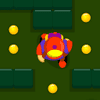
Catch Huggy Wuggy brilliantly leverages this existing cultural footprint. The game does not need a complex backstory. It shows you the character, and you immediately get it. The game’s visual design doubles down on this tension. The environments are often surprisingly cheerful, even mundane, creating a stark contrast with the lanky blue figure darting, teleporting, or sauntering across the screen. This contrast is the game’s core aesthetic. You are not chasing a monster through a haunted house; you are chasing a nightmare that has invaded a safe, cartoonish space. The familiar becomes threatening. The sound design reinforces this perfectly, pairing bouncy, arcade-style music with Huggy’s distinct, unnerving audio cues—a giggle, a whoosh, or a sudden silence that signals he’s about to do something unpredictable.
The Core Loop: A Dance of Anticipation and Action
The fundamental mechanic of Catch Huggy Wuggy is deceptively simple: click on Huggy Wuggy. He appears on the screen, and your goal is to tap him before he disappears or moves. This single action is the heartbeat of the entire experience, but the game’s genius lies in how it continuously twists this simple request into a high-stakes game of cognitive whack-a-mole.
The game’s loop follows a rhythm of tension and release. A level begins. Huggy appears. He might stay still for a tantalizing second, luring you into a false sense of ease. You move your cursor. He vanishes. The tension spikes. He reappears in a completely different quadrant of the screen. You whip your hand across the mousepad, but he’s already gone again, leaving behind a mocking visual echo. This is the core dance. It is not a test of your ability to click on a static object. It is a test of your ability to predict, to track with your eyes, to control your motor impulses, and to manage the frustrating gap between what you see and how fast you can physically react.
Every miss is a lesson. A failed catch is not just a lost point; it’s a direct feedback mechanism telling you that your prediction was wrong, your reaction was too slow, or, perversely, your click was too hasty. The game is training you to find the sweet spot between a panicked, reactive jerk of the mouse and a calm, predictive, fluid motion.
The Strategy of Vision: The Central Focus and Perpetual Readiness
The first strategic leap in Catch Huggy Wuggy is learning how to use your eyes. A novice player makes the mistake of chasing Huggy with their gaze. Their eyes are reactive, always a quarter of a second behind the action, focused narrowly on the spot where the character was. This is a guaranteed path to frustration.
The master’s technique is a soft, wide-angle focus. Instead of staring intently at one part of the screen, you must relax your gaze and take in the entire playing field at once. Imagine you are watching a magic eye poster; you are looking through the screen, not at it. This leverages your peripheral vision, which is far more sensitive to motion than your central, focused vision. You will register Huggy’s reappearance as a flicker of movement in the corner of your eye long before you could locate him by scanning.
Your cursor, therefore, should never be an afterthought. The rule of perpetual readiness dictates that your cursor must always be held in a neutral, central position, ready to travel the shortest possible distance to any point on the screen. If you leave your cursor lingering in the bottom-left after a miss, and Huggy appears in the top-right, the distance your hand must travel is massive, and you will fail. The physical discipline of consistently resetting your cursor to a central home position after every single click is a mechanical skill that separates the amateur from the pro. The game is played as much with your arm’s muscle memory as with your eyes.
Huggy’s Arsenal of Evasion: Know Your Enemy’s Tactics
Huggy Wuggy is not a randomly moving target. He is a programmed adversary with a specific set of behavioral patterns, and learning to identify and counter each one is the key to progression.
The Stutter-Step: This is his most common and maddening move. Huggy appears, pauses just long enough for you to begin your motor action, and then teleports a short distance away. He is baiting your click. The counter is a technique called the "delayed commitment." When you see him, do not instantly jerk your hand. Recognize his posture. If he’s in a "standing" or "grinning" pose, that’s often a bait stance. Move your cursor deliberately toward him, but hold the final click for a micro-moment, ready to smoothly redirect if he flickers. You are training yourself to not fire until your brain confirms the target is real.
The Corner Teleport: A classic frustration generator. Huggy appears in one corner, then immediately warps to the far opposite corner. A reactive player will whip their cursor to the first corner, only to be completely out of position for the second. The counter here is the "midpoint redirect." As soon as Huggy vanishes from the first corner, do not commit to arriving there. Instead, slam your cursor to the center of the screen and immediately begin tracking toward the opposite corner. You are anticipating the most common long-distance pattern and positioning yourself for it. Even if he doesn't appear there, a midpoint position allows you to reach any other spot more quickly.
The Continuous Slide: On certain levels, Huggy doesn’t teleport but slides continuously across the screen in an unpredictable, serpentine path. This tests your smooth-tracking ability. Jerky, start-stop mouse movements will fail here. You must learn to match his velocity. Imagine your cursor is a camera on a dolly, smoothly panning to match a moving subject. Lead the target slightly; don't click on where he is, but click on where he is about to be in the next fraction of a second. This predictive tracking, looking at the target’s forward edge rather than its center, is the secret to hitting a smoothly moving object.
Advanced Reflex Calibration: Bridging the Brain-Body Gap
At its highest level, Catch Huggy Wuggy is a brutal diagnostic of your personal reaction time and its relationship to your physical hardware. You are confronting the neurobiological delay between your retina receiving light, your visual cortex processing the image, your motor cortex sending a signal, and your hand muscles contracting. This is often referred to as "input lag," not from your computer, but from your own body.
You cannot eliminate this lag, but you can calibrate your playstyle to account for it. The key is the transition from conscious reaction to unconscious intuition. When a beginner plays, the mental chain is long: "There’s Huggy. He’s on the left. I need to move my hand left. I am now moving my hand. I am now clicking." An expert’s chain has been compressed through practice into a single, fluid arc: "Target-acquired-move-click." The conscious verbalization step is completely bypassed.
To cultivate this, you must practice in a state of relaxed alertness. Tensing your arm and hand increases reaction time, creating micro-delays in your muscles. A light, relaxed grip on the mouse, with your forearm resting comfortably, allows for the fastest possible flicks. Furthermore, you must manage the startle response. Huggy’s sudden appearances are designed to make you flinch, and a flinch creates a chaotic, unaimed twitch of the hand. Training yourself to receive the visual pop-up without a physical startle response—to let the information flow through you and directly into a smooth action—is a form of digital composure that is the hallmark of a high-level player.
The Psychological Toll: Keeping Cool Under Huggy’s Grin
The game is not just a test of reflexes; it’s a psychological endurance match. The grinning face of Huggy Wuggy is a constant, low-level stressor, specifically designed to tilt you. "Tilt," a term from competitive gaming, is the state of emotional frustration that degrades your rational decision-making. A tilted player chases, slams the mouse button, and makes the same mistake over and over, their timing getting progressively worse.
The first defense against tilt is to laugh at the design. Recognize that the game is trying to make you flustered, and appreciate the craft behind it. Huggy’s grin is meant to be unnerving; his sudden vanishing is meant to annoy you. By reframing these not as personal failures but as the game’s mechanics working as intended, you create an emotional buffer.
The second defense is rhythmic breathing. It sounds absurd, but in the heat of a frantic level, players unconsciously hold their breath, starving their brain of oxygen and degrading their reaction time. A steady, deep breathing pattern, synced with Huggy’s rhythm of appearance and disappearance, keeps your physiology calm. The game becomes a breathing exercise with a clicking component. When you feel the tightness of frustration in your chest—the telltale sign of an impending mistimed click—take a deliberate, slow breath before making your next attempt. This moment of forced calm resets your nervous system and brings you back to a state of wide-angle vision and smooth motor control.
A Parent’s Guide: Navigating the Playful Horror Genre
For a parent who might stumble upon their child playing Catch Huggy Wuggy, the character can be alarming. The rows of teeth, the manic grin, and the name itself might trigger immediate concern. It is a perfectly reasonable reaction in an era where children have unprecedented access to digital content. It is helpful, therefore, to understand the game as a form of "playful horror."
This game exists at the bottom of the horror ladder. There is no gore, no narrative terror, and no realistic violence. The horror is entirely iconic. Huggy Wuggy is a monster in the same way a pop-up in a funhouse mirror maze is a monster. The thrill comes from the surprise and the tension, not from witnessing harm. The core mechanic is chasing and catching, not fighting or destroying. It’s a digital game of tag with a spooky-looking "it."
The game can even be a beneficial tool for emotional regulation. It allows children to experience a controlled dose of fear and tension in an environment that is completely safe and entirely under their control. The child is the pursuer, not the pursued. This reverses the typical fear dynamic and can be genuinely empowering, turning a scary image into a target to be mastered. Having a simple conversation—"Is he a bit spooky? It’s fun to feel a little spooked when you know you’re safe, isn’t it?"—can transform the experience from a passive consumption of scary imagery into an active, intelligent engagement with the emotion of fear itself.
From Frustration to Flow: The Journey of Skill Acquisition
The path from your first fumbling click to a state of effortless mastery is a clearly defined journey, and understanding its stages makes the process far more rewarding.
Stage 1: The Panic Phase. Your first few games are pure, unadulterated chaos. You click wildly, you miss constantly, and the game feels unfair. Huggy seems to be in six places at once. This is not a sign of a lack of talent; it’s a necessary calibration period where your brain is simply overwhelmed by the novel stimulus.
Stage 2: The Pattern-Seeking Phase. The chaos begins to organize itself. You notice the stutter-step. You start to predict the corner teleport. Your misses become closer. The game feels less random and more like a puzzle you are starting to decode. You are moving from a reactive to a predictive framework.
Stage 3: The Motor-Automation Phase. Your brain has learned the patterns, and now your hand is catching up. The cursor reset to the center becomes automatic. The smooth tracking motion for sliding Huggys becomes muscle memory. You no longer think about how to move; you just think the target, and your hand obeys. This is where the game becomes deeply, meditatively satisfying.
Stage 4: The Flow State. The world falls away. There is only the screen, the grin, and the click. The loop—appear, track, predict, catch, reset—becomes a continuous, unbroken ribbon of action. A missed click doesn’t trigger frustration but is instantly processed as a minor calibration error to be corrected on the very next attempt, which happens in a fraction of a second. This is the peak experience the game offers, and it’s a state of pure, focused presence in the moment.
The Broader Arcade Ecosystem: Why It Fits
Catch Huggy Wuggy does not exist in a vacuum on GamePix. It is part of a broad tradition of "reaction-based arcade" games designed to be picked up in seconds but mastered over months. Its power comes from the emotional vector added by its character. Compare it to catching a simple bouncing ball. The mechanics are nearly identical, but the emotional engagement is a tenth as strong. Huggy’s face provides the "why." The ball is just a target; Huggy is an antagonist. The game taps into our deep-seated narrative instinct to pursue and overcome a monster, turning a simple reflex test into a heroic story loop where you are the victor. This fusion of a simple, robust arcade mechanic with a high-impact pop-culture character is a formula for a uniquely sticky and compelling game.
The Final Catch: Mastery is a Mindset
At the end of the chase, Catch Huggy Wuggy teaches a simple but profound lesson: your greatest opponent is not the grinning blue monster on the screen, but your own impulsivity. The game is a masterclass in delayed gratification. It rewards not the fastest panicked jerk, but the calm, one-beat-delayed, perfectly aimed click. The space between his appearance and your click is where the real game is played—a tiny theater of decision, prediction, and composure.
So, the next time you load up the game and that familiar, toothy grin fills your screen, don’t flinch. Take a breath. Let your eyes go wide and soft, place your cursor in the center of the board, and wait for the flicker in your peripheral vision. Do not chase. Anticipate. Do not react. Receive. The game slows down. The space between his jumps stretches. He is no longer a chaotic monster, but a predictable puzzle piece, and your hand is the final, elegant, and inevitable solution. That is the art of the catch. Now, go get him.
Embed this game